
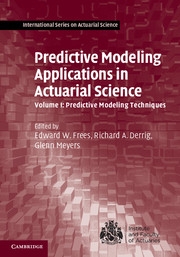
Why Predictive Modeling is Important to Your Future as an Actuary
Over the past decade, predictive modeling has become an important topic in the actuarial community. This informative Future Fellows newsletter article, published in 2012, provides a good overview of the subject and also puts forth a simple definition of predictive modeling: using past data to predict the probability of some future outcome. Initially utilized by personal lines carriers, predictive modeling is now being used by CAS members in many different lines of insurance. Working with insurance data poses several unique challenges and CAS members and their companies benefit greatly from employing more advanced statistical methods in their lines of work.
Knowing the importance of predictive modeling to CAS members and future members, Jed Frees, Glenn Meyers and I worked with the CAS to envision “Predictive Modeling Applications in Actuarial Science,” a two-part series published by Cambridge University Press and sponsored by the CAS and the Canadian Institute of Actuaries. Volume One, which explores the foundations of predictive modeling, is now available through Amazon and Cambridge University Press.
You may already be familiar with predictive modeling, and it remains a large part of where the actuarial practice is headed. This book series showcases CAS’s ongoing commitment to provide its members and future members with extensive opportunities for predictive modeling continuing education, enabling them to be leaders in the field. The book’s website also features many free resources for immediate practical use, including content preview, data (.txt or .csv format) and R code (.R format) for each chapter. These are valuable tools for anyone interested in actuarial science, even at the student level.
My question for Student Central members: have you been exposed to the topic of predictive modeling in your academic coursework?
Richard A. Derrig, Ph.D., is President of OPAL Consulting LLC and Visiting Professor of Risk, Insurance and Healthcare Management at the Fox School of Business at Temple University. He is also a member of CAS Academic Central. He serves as co-editor for “Predictive Modeling Applications in Actuarial Science,” along with Edward (Jed) Frees, University of Wisconsin – Madison and Glenn Meyers, retired from ISO Innovative Analytics. The set is part of the International Series on Actuarial Science from Cambridge University Press. Volume Two is expected to be published in the fall of 2015.
Proceeds from sales of the book will go to the Actuarial Foundation, a widely respected charitable organization that promotes actuarial scholarship, as well as its Canadian counterpart, the Actuarial Foundation of Canada.

 What is the most important advice for students interested in pursuing a property & casualty actuarial career? Which exams and classes are most important to take during college? How do I decide between P&C, Life, and Health? What is the difference between working for a consulting firm vs. an insurance company?


 This is one of my most favorite quotes noted on the back of my career coach’s business card. It always motivates and inspires me. When I was an applied math student three years ago, I realized my career goal was to become an actuary, not just any actuary, a great actuary. I knew this profession would be very challenging but I told myself: “I can do it and I will.”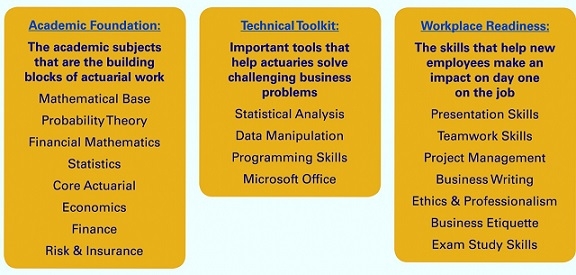


 Your first internship can be an intimidating experience. Surrounded by professionals in a business environment, new interns tend to have many questions, and sometimes miss out on great opportunities. Recent intern testimonials from Temple University’s Sigma Chapter of Gamma Iota Sigma show common trends among students who completed internships. Many of these students had rewarding summers, but many also missed some great networking and project opportunities.

 The days of naps, classrooms, hanging out on campus, and studying will soon be a distant memory! Okay, maybe not the studying part; but the time comes when we must transition from living the college life to having a full-time career. It can be scary, and sometimes even difficult. The important part is that we learn from those around us and embrace the change.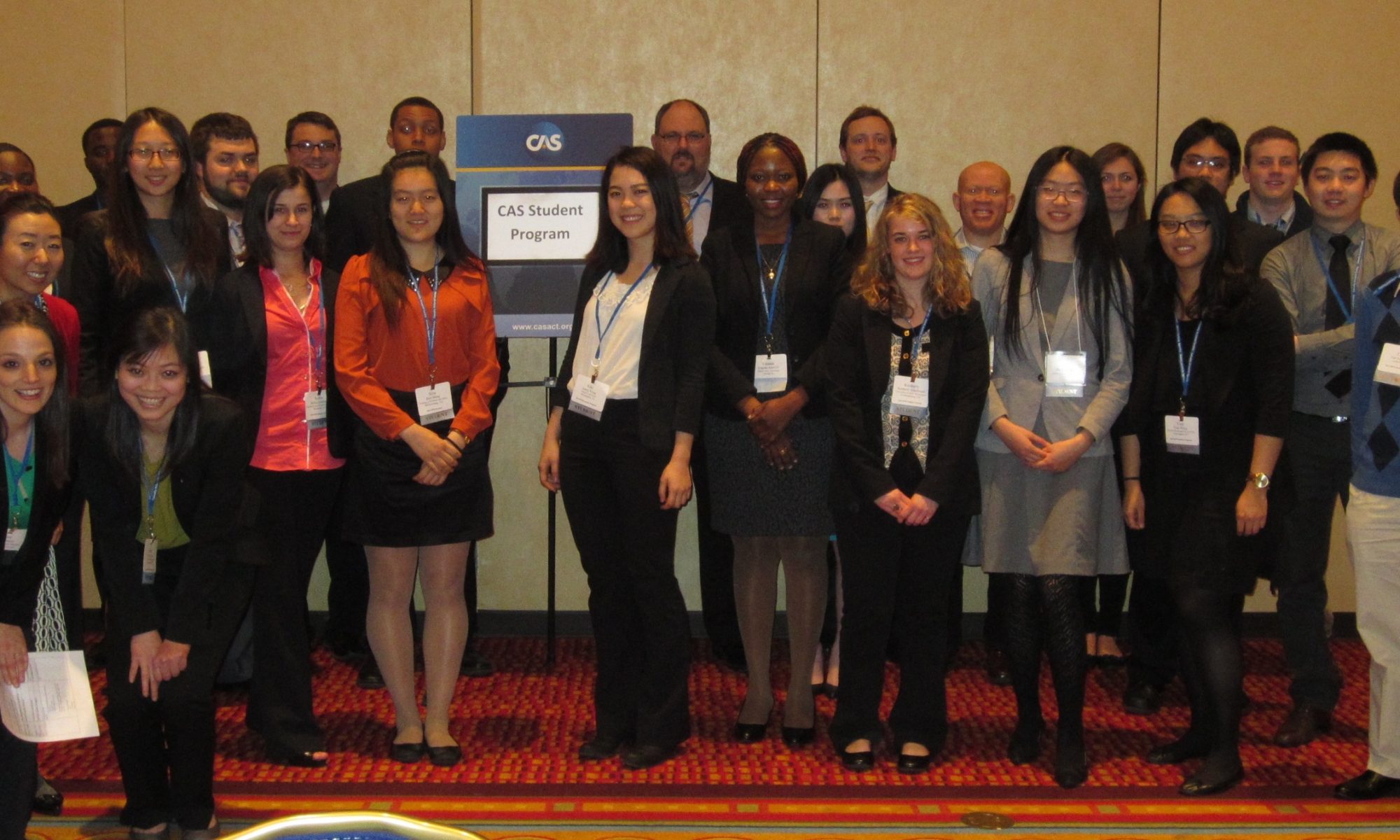
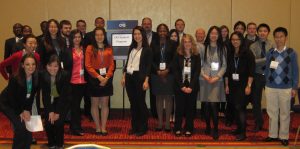 As an international student with a non-traditional background (Math PhD), I am convinced that I cannot rely on the conventional channels to help me land my first actuarial job. Coming from an academic background, I understand that professional conferences are the best place to meet people and to build professional relationships. So when I heard that CAS was offering a dedicated student program at its Ratemaking and Product Management Seminar (RPM), I signed up right away. I am so glad I did because what I experienced at RPM far exceeded my expectations! It was a full day of activity; I would like to focus on recounting my experience in two areas: networking and learning.