Land Your Next Actuarial Internship: Set Yourself Apart From the Competition

Application Season

The application season for summer internships begins the preceding fall, typically starting in September and lasting until February. Highly competitive paid summer internships sometimes see deadlines as early as November. Acceptances generally begin rolling out in  January, so it’s important not to wait until the last minute to apply. You don’t have to wait until the application information is posted for the current cycle if you want to start preparing. Looking up companies’ postings from previous years will help give you a sense of their specific timelines, required qualifications, and what the intern’s responsibilities will be.

Exams

GettyImages-1133954520.jpgWhile a high GPA is important, the best way to demonstrate both your intellectual capacity for actuarial work and your dedication to joining the field is by passing exams. Though not ubiquitous, some companies require that a candidate pass at least one exam in order to qualify for their internship program. In general, you can expect to spend 200+ hours over the course of 3 – 4 months studying in order to pass Exam P.

Quality time spent is as important as quantity, so prepare to set aside enough quality time to give yourself the best chance. The importance of passing exams cannot be overstated. Beyond the internship, when it comes time for your first full time job, you will be hard pressed to find a position that does not require at least two exams passed.

Technical Skills

To give your application a competitive edge, make sure you can express your technical ability. The three main data analytics tools used by actuarial employers today are:

SQL/SAS – Have been the market leaders in the commercial analytics space. SAS is generally regarded as intuitive with great technical support, but with the drawback of being the most expensive of the three. SQL is regarded as having more flexibility and variety of analytical uses.

R – The open source counterpart of SAS. Due to the nature of being open source, the latest techniques get released quickly.

Python – Currently, the most popular programming language overall and one that is in high demand with actuarial employers.

While proficiency in any one of these will not make up for a lack of exams or a low GPA, they may make an already strong candidate even more impressive.

Emotional Intelligence

GettyImages-904961688.jpg

In a world moving towards automation, emotional intelligence is one of the most valuable skills one can cultivate. Daniel Goleman, American psychologist, was the first to popularize the term “Emotional Intelligence”, quantified as EQ (Emotional Quotient), in the 90s. He outlined the five components of emotional intelligence as:

  • Self-Awareness – the ability to recognize and understands ones emotions
  • Self-Regulation – the ability to control impulses and express oneself appropriately
  • Motivation – having an interest and ability to learn and improve
  • Empathy – the ability to understand other peoples emotions and reactions
  • Social Skills – the ability to maintain friends and relationships through finding common ground with others

Why is this pertinent to getting an actuarial internship? Particularly in the STEM world, companies are finding that an employee’s EQ is the best predictor of job performance. You will most likely encounter an EQ assessment in the form of behavioral questions during an interview. These questions will likely be about a personal experience or hypothetical situation that may resemble challenges you’ll likely face in that role in order to assess your ability to collaborate, communicate effectively, and be aware of both your own emotions and the emotions of those around you.

Networking and Extracurricular Activities

As a college student, you should be encouraged to take advantage of the resources that are available to you – not only your professors and colleagues, but also the third parties that come to campus by way of career fairs and networking events. These are excellent opportunities to grow your list of contacts, as well as expand your knowledge about the actuarial profession. Speaking with actuaries from different disciplines may give you a better idea of what subject matter is the most exciting to you or what exam track to follow. Recruiters, both in-house and third party, may be able to give you an idea of what a company’s functions are and what the culture is like. Sufficed to say, attending these events will both expand your network and give you access to a wealth of industry knowledge.

Extracurricular activities don’t have to be geared towards professional development, either. Excelling in a sport or hobby is a great way to show perseverance and dedication and holding an executive position in a club or society shows the maturity and capability to be a leader, all while honing your soft skills and showing your personality.

It takes a lot of dedication to become an actuary. But it’s worth it! Actuaries tend to enjoy their work and the field has a high satisfaction rating. That the pay is better than most other professions is a plus, too, of course. All the time you are spending to develop and hone your skills, pass the exams, and search for an internship will all be worth it!

About author: Elizabeth Owen, Recruiter, Ezra Penland Actuarial Recruitment


Search CAS Directory


The CAS Trust Scholarship: Expanding its Reach and Impact in the P&C Actuarial Industry

CAS.Trust.Scholarship.jpg

Fall is upon us again, and university students have been back in the classroom for a few weeks now.  With the new academic year also come exciting changes to the CAS Trust Scholarship that will not only increase the awards available for college students, but also help position the CAS as the premier actuarial society for P&C insurance.

The CAS Trust Scholarship committee is very impressed each year as we look at dozens of applicants that demonstrate innovative thinking, noteworthy actuarial experiences, and impressive recommendations with respect to the P&C actuarial industry.  In addition, many students demonstrate great actuarial potential and would be valuable additions to our professional community, even if their “resumes” don’t necessarily reflect some of the common attributes we often see: a summer P&C internship; a supportive college actuarial science student program; or devoted actuarial coursework intended on helping students pass exams.  These types of students might be in the midst of changing their major, attending a university not typically associated with actuarial science, or have some other type of life experience that is consistent with the type of thought diversity that would improve the CAS.  Nevertheless, they demonstrate the type of hard work, innovative accomplishments, and thought creativity consistent with the standards with which our committee evaluates.

In the past, awarding only up to 3 scholarships  usually meant we were not able to recognize and encourage some of these types of students with the benefits of being a scholarship recipient.

Therefore – as noted in a recent press announcement – the CAS will now be awarding up to 8 scholarships (4 at $5,000 and 4 at $2,500), which reflects a significant increase in not only total dollars awarded but also number of individual winners each year.  We on the committee feel that this new award structure will facilitate a greater reach of support on behalf of the CAS, and recognize a broader pool of actuarial talent which we are confident will eventually contribute to the ever-innovating professional society that is the CAS.trust-300.jpg

On top of the financial award, one aspect of the scholarship of particular value for students is the opportunity for the four $5,000 recipients to attend an expenses-paid trip to the CAS annual meeting.  This trip is a great opportunity for both the students to network and gain insights through a deeper view of the CAS, but also for experienced members of the CAS to meet and encourage these up-and-coming rock-star actuaries.

The benefits of the Trust Scholarship are clear – and I speak from experience.  As a 2008 scholarship recipient myself, I appreciate not only the financial value the scholarship brings, but even more so the encouragement and morale-boosting this recognition affords to hard-working students focused on their education, exams, and future actuarial career.  It is truly a blessing to be able to sit on the other side of the table and pass this type of honor onto the next generation.

The scholarship application is now posted online and I encourage all university students to apply and demonstrate their understanding of – and future contributions to – the P&C actuarial industry.  Good luck to all applicants and I look forward to helping broaden the CAS’s reach to a fantastic talent pool!


About Author: Brett Jaros, FCAS, RPLU, CPCU is Chair of the CAS Trust Scholarship Committee and a 2008 scholarship recipient. He works as Actuarial Director of specialty pricing in the Financial Lines department at CNA Insurance in Chicago.


Search CAS Directory


CAS at the Gamma Iota Sigma Annual Conference

The CAS was proud to be a Platinum Sponsor of the Gamma Iota Sigma (GIS) Annual International Conference last week in Dallas!  We had a great time connecting with faculty, students, and industry partners throughout the event.

As part of our involvement, the CAS hosted a booth in the exhibit hall where participants could learn more about the P&C career path. Thank you to everyone that stopped by as well as the CAS volunteers who provided valuable insight and information to students about their experience in the P&C field.

The CAS also hosted a panel entitled Risk in the Driver’s Seat: Navigating the World of Automated Vehicles. The panel discussed the risk surrounding automated vehicles and provided insight into the complex intersection between semi and fully automated vehicle technology and insurance. Thank you to Roosevelt Mosely, FCAS, Pinnacle Actuarial Resources, Barbara Ingraham, Verisk, Chris Nyce, FCAS, KPMG and Erin Olson, FCAS, USAA, for participating in a thoughtful program filled with great discussion between attendees and panelists. 

IMG_5724.jpg       IMG_5741 (1).jpg

Lastly, the CAS would like to thank Gamma Iota Sigma for putting on an amazing event. As a Sustaining Partner of GIS, we are proud to support this annual event; thank you for all your hard work making the conference flow seamlessly. We look forward to attending next year’s conference!

To learn more about Gamma Iota Sigma and the membership opportunities, visit https://www.gammaiotasigma.org/membership.  For those who are already GIS members and attended this year’s conference, let us know in the comments below what you found to be the highlight of the conference!


Search CAS Directory


Rating Variables: What They Are and Why They Matter

Accident History. Gender. Marital Status. Credit Score. What do these things have in common? They are all rating variables that an actuary might use to calculate your insurance premiums.

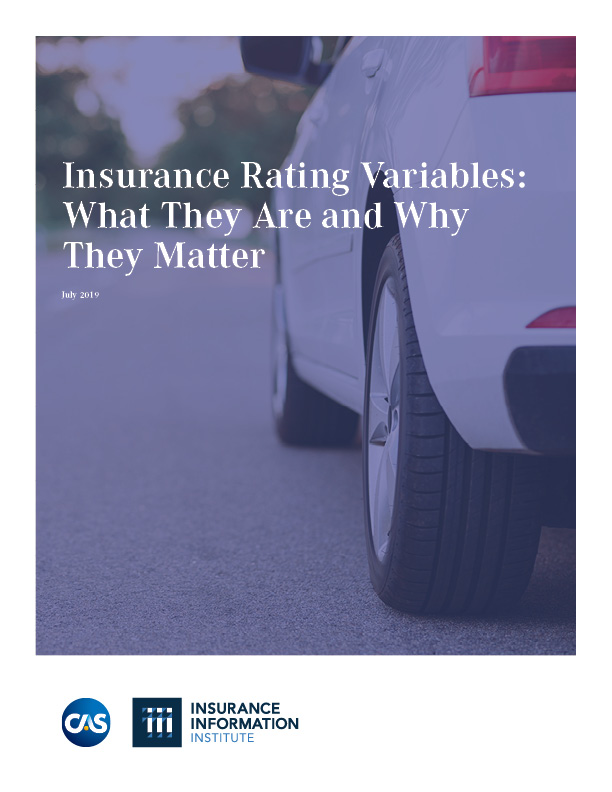
CAS & III White Paper FINAL cover.jpgThe use of rating variables by actuaries and insurance companies is getting increased focus in state and federal legislative groups as well as in the media. But what are rating variables exactly, and how are they used by actuaries? The CAS and Insurance Information Institute (I.I.I.) published a white paper last month to help educate consumers and policymakers on the topic, and we thought students studying to be actuaries would be interested in the paper as well.

Rating variables are the characteristics of consumers that can help approximate the cost of their risks. For example, the make, model, or mileage of your car factor into how much you pay for your auto insurance – we also created this handy infographic to illustrate this concept. However, when one or more rating variables, such as gender or credit score, is removed from the equation (which can happen through legislation at the state level), there can be unintended consequences. The new white paper seeks to explain some of the potential outcomes that can occur when rating variables are restricted.

There is certainly evidence of variable restrictions in various states: California recently passed a law banning gender rating, and law changes in Michigan will restrict the use of many rating variables such as credit score and geographic zip code. James Lynch, FCAS, of the I.I.I. recently represented the insurance industry, and the actuarial profession, at a congressional hearing regarding rating variables and discrimination (fast forward to 36:04 to watch Jim’s testimony). As the issue of rating variables evolves in the eyes of legislators and the public, the CAS/I.I.I. white paper will continue to serve as a resource to help with the understanding of why rating variables help make insurance both fair and affordable.

If you are interested in learning more about the basics of rating variables, we encourage you to read the white paper and share with others! As you continue your path to becoming a P&C actuary, keep in mind that actuaries can serve an important role in explaining the concepts and calculations that go into the “behind the scenes” work that ultimately affects every consumer carrying insurance.

Kate Niswander is the Marketing and Communications Manager at the CAS.

Search CAS Directory


Catch up on the Latest Student Central Webinar!

Last spring the CAS hosted a webinar for Student Central members entitled, “A Day in the Life of a Property and Casualty Actuary.” The webinar was presented by CAS Fellows Timothy Vosicky, FCAS, MAAA and Richard Moncher, FCAS, MAAA. The hour long webinar was rich with content and discussed the following topics:

  • What a workday looks like for entry-level ratemaking and reserving actuaries
  • Similarities and differences between working at a consulting company vs. an insurance company
  • Detailed ratemaking and reserving examples to illustrate for students the types of real-life projects they can expect to encounter on the job
  • Q&A

To learn more about life as a Property and Casualty Actuary and gain valuable firsthand knowledge from P&C Actuaries, view the webinar in the Student Central Online Community!

Apart from “A Day in the Life of a Property and Casualty Actuary”, there are several other webinars on the Student Central website. Webinars are a free resource for student members and a great way to learn more about the actuarial profession as well as P&C career related topics.

Do you have a topic you would like to learn about but hasn’t yet been covered? Comment below what webinar you want CAS Student Central to present on next!


Search CAS Directory


Making the Most of Your CAS Student Central Membership!

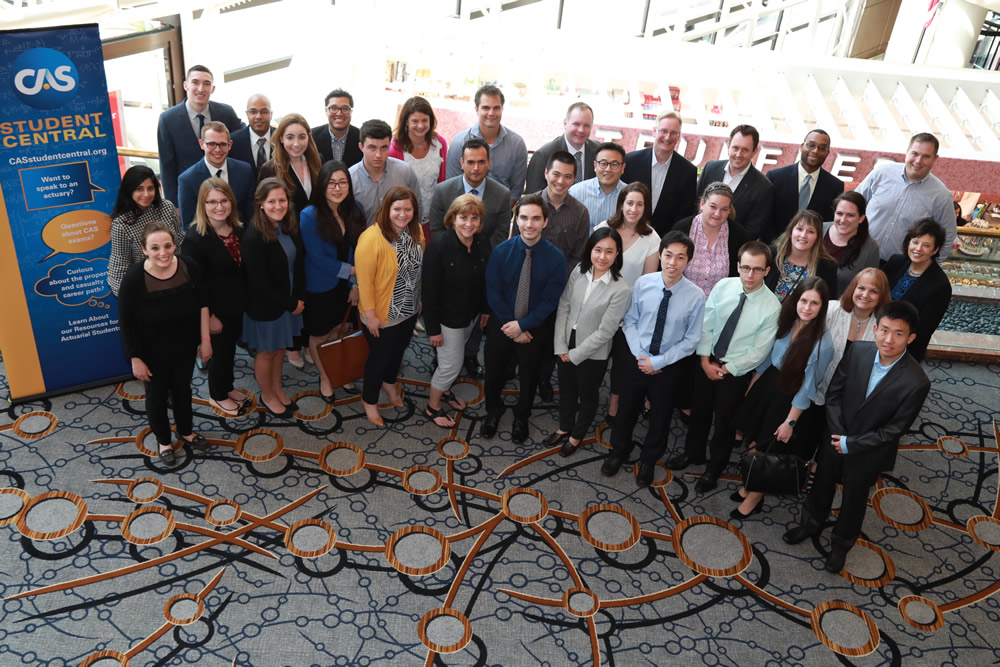
CAS Spring Meeting Student Program - Group Photo .jpg

When I decided that I wanted to pursue actuarial science back in 2006, student resources were scarce and expensive. In fact, I was the one that told my professor that the first exam was no longer calculus (and hadn’t been since 1999). Now, thanks to CAS Student Central, there are tons of FREE resources out there for aspiring actuaries.

Are you making the most out of your membership? Here is a snapshot of what CAS Student Central provides to its members, through its FREE membership program!

SC Membership Benefits Graphic.JPG

Check out CASstudentcentral.org today to take full advantage of your membership!

Have an idea of a new service we should offer? Leave a comment below or email CASstudentcentral@casact.org to provide your input!

 About Author: Meghan Goldfarb, FCAS, MAAA, CPCU, MBA, CSPA is Chair of the CAS Student Central Program. She works as Architecture Director-Business in the Enterprise Technology Department at State Farm


Search CAS Directory


Getting Involved Outside of Your University By Attending Insurance Conferences

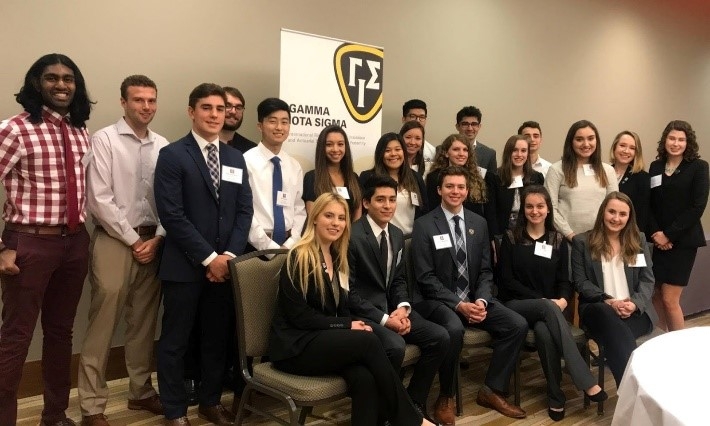
Do you ever want to travel to cool places around the country? Do you want to meet and network with actuarial students from other universities? Do you want the opportunity to learn about insurance from seasoned industry professionals? If you answered yes to any of these questions, you should keep reading to learn about some of the experiences we’ve had at insurance conferences throughout the United States. As Gamma Iota Sigma (GIS) officers and CAS Ambassadors at Temple University, we’ve had the privilege of attending many events where we got to learn, network, interview, and experience some of the greatest moments of our collegiate careers.

Nitai discusses his experiences attending the CAS Annual Meeting and the GIS International Conference. Jessica discusses her experiences attending a GIS chartering ceremony and Philadelphia Insurance Day. We also interviewed a fellow actuarial student, Joel Kuruvilla, about his experience attending the Risk Management Society (RIMS) Annual Conference.

CAS Annual Meeting

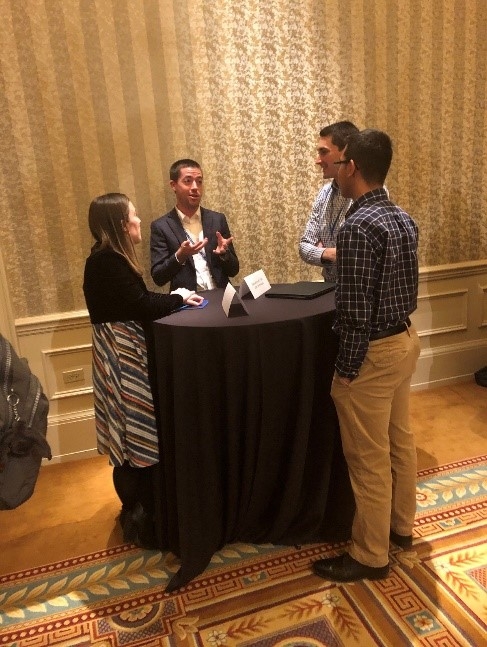
As a CAS Student Ambassador, I was invited by the CAS to attend the Annual Meeting in Las Vegas this past semester. For me, a big part of the conference involved networking with other ambassadors across the country and discussing ways to increase awareness of the property and casualty industry at our schools. I also got to sit in on some of the general sessions at the meeting including a talk that discussed some of the similarities and differences between actuaries and data scientists. My favorite part of the conference was a speed networking session with mentors from companies such as Travelers, AIG, and Uber (pictured above). The CAS is hosting student programs in New Orleans, Bermuda, and Austin in the next few months. Click here for more info!

Gamma Iota Sigma International Conference

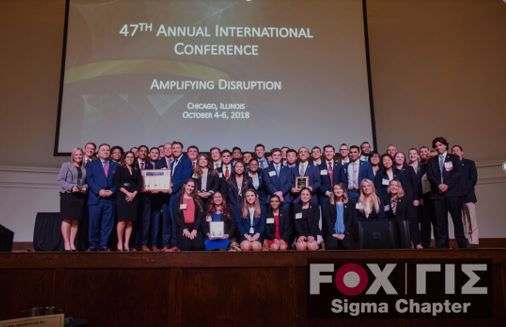
Every year, GIS hosts an international conference for students from chapters across the country. The conference is packed with 3 days full of networking, speaker sessions, luncheons with AMAZING food, and a career fair with 80+ companies. Several schools also get the opportunity to have their own breakout sessions. Last year in Chicago, Temple partnered with Butler University on a session to help students increase passion for community service at their own schools. My favorite part of the conference, apart from eating all the food, was the stand-up comedy session at the end of the conference. I don’t think I’ve ever laughed so hard! This year’s meeting is from September 26th – 28th in Dallas, Texas. GIS recently started offering an at-large member category open to any college student attending a school where no GIS chapter exists. Click here for more info on the conference and how to join if you’re not already a member!

Gamma Iota Sigma Chartering Ceremony

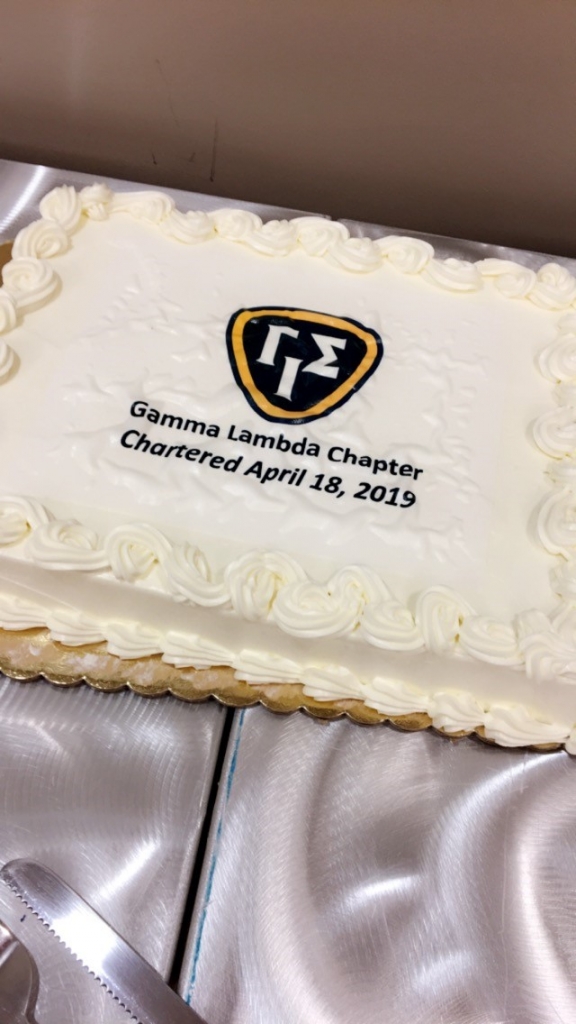
Being a part of an initiation ceremony for a new chapter of GIS is a unique and celebratory experience. Because the first insurance transaction involved insuring ships and cargo, the members of the initiation team serve as ship officers navigating the new candidates to membership. The ceremony also includes a speech from the president of the new chapter detailing the chapter’s goals as well as a speech from a student of an active chapter discussing the benefits of membership. Additionally, students from the new chapter have an opportunity to meet and interact with students from active chapters. Discussions include ways to operate a new chapter, increase membership, and gain experiences to develop professionally. These conversations provide new members with a network of students to reach out to regarding GIS. Initiated on Thursday, April 18th, 2019, the newest chapter is the Gamma Lambda chapter at the University of Illinois at Urbana-Champaign.

Philadelphia Insurance Day

Every spring, The Insurance Society of Philadelphia partners with The CPCU Philadelphia Chapter to offer a full day of education and networking with insurance, risk management, and actuarial science professionals. This year’s keynote speakers were Inaki Berenguer, the CEO of CoverWallet, Mark Purowitz, a senior partner at Deloitte Consulting LLP, and Jonathan Kalman, founding partner of Eos Venture Partners. Their panel discussion centered around the future of insurtech. Expert sessions continued throughout the day on topics such as active shooter policies and current niche insurtech examples. As an attendee of this event, I can say the speakers were very captivating and genuinely made me enthusiastic about a future career in insurance. Click here for more info!

RIMS Annual Conference and Exhibition

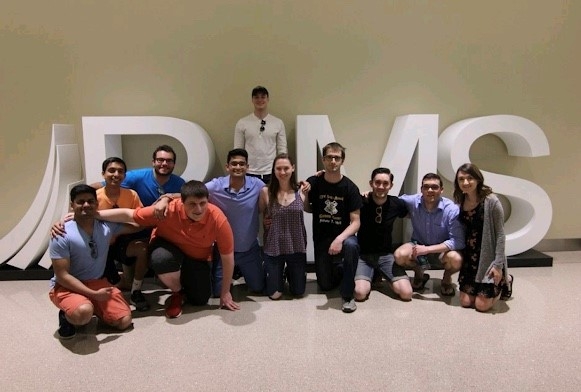
To learn more about RIMS, we interviewed Joel Kuruvilla (pictured far left), a junior actuarial science major who attended the RIMS conference last year along with several other students from Temple. He stated that the RIMS conference was one of the highlights of his time in college because he had the opportunity to see some of the newest technological innovations that insurance companies have to offer, with his favorite being virtual reality software. Other technologies included a health instrument that measures how firm a person’s grip is relative to that of other people of the same age and gender. Apart from the technology, Joel also enjoyed sitting in on several breakout sessions such as a diversity and inclusion roundtable and a presentation on cyber security. Finally, Joel loved touring San Antonio and meeting students from other schools across the country. “I met students that I saw at future conferences and in New York during my summer internship. RIMS helped me make meaningful, lasting connections, and I’m very thankful for that.” This year’s meeting is in Boston from April 28th – May 1st, and Jessica will be in attendance! Click here for more info!

We hope you enjoyed reading about all the cool events we’ve been to, and we hope to see you at one in the future!


Nitai Patel and Jessica Zimmerman are both seniors at Temple University. Nitai is majoring in Actuarial Science, and Jessica is double majoring in Actuarial Science and Risk Management and Insurance. In addition to being CAS Student Ambassadors for Temple University, they both serve as officers of Temple University’s GIS chapter, where Nitai is Director of Management Information Systems, and Jessica is Director of Student Affairs.


Search CAS Directory


Study Techniques – The Practice Exam

An important step in successfully preparing for an actuarial exam is taking practice exams. Before trying that first practice exam, it is important that you are fully prepared. You want to understand the material and have worked many practice problems. Here are some tips on getting the most out of your practice exams.

First, you want to take these in exam-like conditions – no interruptions, no distractions.  It is important to take practice exams seriously. If you feel a little nervous before you start, that is good.  You will most likely feel this way on exam day, and this helps you better prepare for when your actual exam day comes.

1.6BlogImage.jpg

During your exam, write down your calculations.  You will use this when grading your performance. Also, write down the time it takes to complete each problem.  A good method for this is to start a new sheet of paper for each problem with the number at top and the time remaining when you start the problem.  If you skip and go back, just keep track of the time again after you go back. After you finish, calculate the time that it took to do each problem.

For each problem you miss, identify the reason, such as not understanding the problem or topic or maybe you just made a simple calculation error.  Make sure that you also identify the problems that you got correct even though your method does not match the method in the solutions. You need to make sure your solution is a correct method.  Finally, note the topic of any problems where you spent more time than you should have.

6 Time.jpg

At this point you will have identified common mistakes you made and some specific topics in the course that you need to work on.  Review these sections. Work more problems. You need to become better prepared so that you can answer more questions, work problems quicker, and not make silly mistakes.  Depending on how you do on the first practice exam, you could need as much as a week to get ready for the next one. That’s okay – we are trying to avoid spending several extra months retaking the exam.

By the time you have completed this process a few times, you will be ready to take the real thing with confidence.  I often hear of candidates taking 15 or 20 practice exams as part of their final stage preparation for the preliminary exams.  Many times, these candidates are taking multiple practice exams each day. Unfortunately, for most candidates this is not the best way to use that time.  This method has two important drawbacks – spending too much time working problems in your areas of strength, and not enough time working problems in your area of weakness.  Plus, the time that should be spent focusing on knocking out your weaknesses gets wasted as you make the same mistakes over and over on subsequent practice exams. Your study time is too precious to waste any of it taking practice exam after practice exam without using them properly to improve your readiness for exam day.

Understanding the important role that practice exams play in exam preparation, CAS Student Central partnered with The Infinite Actuary to provide members with access to practice exams for Exams P and FM.  This benefit underscores the CAS’s continued commitment towards helping Student Central members make the successful transition from classroom to career.

Student in Classroom.jpg

The Infinite Actuary grants members of CAS Student Central exclusive access to two additional free sample exams on P and FM, beyond those already offered for free on The Infinite Actuary website.  Each problem on these full length sample exams offers a video solution to ensure that students have a strong understanding of the material.  This exclusive access is usually only available to students through the purchase of an Online Seminar through The Infinite Actuary. Our instructors take great care in evaluating the material and choosing a distribution of topics and level of difficulty that is close to what a student will actually see on exam day.  Taking the practice exam on our software that closely resembles the CBT exam allows the student to work on timing and strategy.

So make the most of your time.  Prepare yourself to be successful and pass your exam.

Ken Fikes, FCAS
President, The Infinite Actuary


About the Infinite Actuary

In 2007, The Infinite Actuary became the first company to offer online actuarial exam prep products. Since then, the company has helped tens of thousands of actuarial students taking preliminary and upper-level exams. The Infinite Actuary works with highly qualified actuarial exam instructors to deliver a top-quality experience to customers. Online products are available throughout the year and can be viewed on a computer or using our iOS or Android apps.


Search CAS Directory


Realizing My Dream – My Path to a Superpower Career

Uugii 2.JPGI’m an aspiring actuary and a college senior whose journey began in Mongolia where I grew up envisioning a future as a superhero.

Let me take you back in time … to Mongolia.

“Uugii, you’re too slow, the water is starting to spill and freeze into our hands. We need to go faster!” yelled my older cousin.

“Well, that’s because I’m carrying the heaviest 20-liter cans!” I replied.

My cousin responded with a smirk on his face, “Haha! Thank me later. You’ll look like Arnold Schwarzenegger if you keep it up.”

We chatted back and forth as we carried the heavy cans of water from the well back to our home that -40 degree winter night in Mongolia. The destination was an almost 20-person household in an old wooden house on the outskirts of the capital city of Ulaanbaatar.

After cooking with the water over an open fire lit by wood, an hour of electricity would come on and we all shared a movie together. The kids sat in the front, close to the television, ready to give it a hard smack with the speed of a cobra so we wouldn’t miss anything in case it went blank. When bedtime came, my cousins and I, who were only a couple years older than me, would sleep on the floor and have a friendly tug of war, pulling the blankets back and forth to secure more real estate.

During playtime, my cousins and I would often play a game where we pretended to have a superpower. This was our ultimate fun! My cousins would choose superpowers such as “speed of light,” “invisibility” or “super strength,” and when my turn came, the answer would always be the same: “The ability to see the future.” To me this was the definition of a superhero, the ultimate power. I would envision myself pulling my cousins out of danger by foreseeing the future. I was always the unnamed superhero, without much credit, when we accomplished our conquest of climbing the nearby mountain by successfully opposing the imaginary mountain guards and spirit animals. Did I mention these were the best times of my life?

Fast forward many years later to present day.

I recently found out as I looked in the mirror that my older cousin was exaggerating — I am nowhere close to Arnold. However, as an actuarial student at University of Wisconsin-Madison, my fantasy of becoming an unnamed superhero who sees the future for the well-being of others is coming true, because that is what an actuary does. In fact, the insurance industry as a whole is about making a difference in the lives of others by safeguarding people’s future and having a helping hand ready when they need it.

Sunset.JPG

The insurance industry contributes to the welfare of society in many ways. With an actuarial career ahead of me, I’m excited to reimagine the future with self-driving cars, buildings beyond our imagination, and everything else the mind has yet to conceive. Insurance companies are already looking ahead to determine what these changes will mean and how they will adjust to ensure our society is protected. Also, the insurance industry goes beyond its role of helping by means of our superpower; the industry also donates millions of dollars to charities and thousands of hours of volunteering time to support local communities. The industry is the invisible force that protects society, and behind that are people like me, who started a career journey as the little kid shielding his cousins from the mountain guards and spirit animals.


Uugii Jargalsaikhan is from Ulaanbaatar, Mongolia. He is currently a senior majoring in actuarial science and information systems at the University of Wisconsin-Madison. He previously served as Vice President of Member Relations for his university’s actuarial club and is currently a CAS Student Ambassador.


Search CAS Directory