
Working Abroad
Working Abroad
Taking a Risk and Making It Work
Hello! It’s me again – Derek.
If we haven’t had a chance to meet yet, I’m a published blog author. Based on the number of likes on my last post, I’ve changed the lives of at least 5 people. (Although actually one like is from myself…)
Anyways, my side job is also being an actuary. I work at CNA Insurance in downtown Chicago.
Two years ago I got the opportunity to go work in London. We have an office out there of about 200 people, and an actuarial unit of 15 or so.
Going to work abroad was not a slam-dunk decision for me. I really enjoyed my job and I was signing-up for a two year assignment. I’d be packing up everything I had in Chicago, and moving away from friends and family. To a place where I knew exactly zero people.
I’d be flying solo.
Questions swirled through my head.
What if I don’t like the office? Or my team? Or the work? What if I get homesick? What if I lose touch with my friends in Chicago? What if there’s an emergency? I would know no one.
On the fence, I talked to my friend about whether to accept the job or not. His advice was straight to the point:
“Dude, you’ll regret it if you don’t.”
And just like that I realised he was right. I had a unique opportunity in front of me and I had to take it otherwise I’d be thinking about the What If? for a long time.
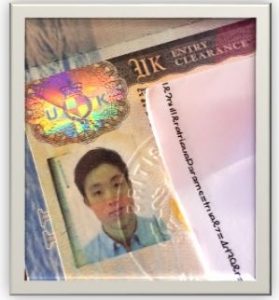 So after some paperwork, getting the Biometric labs done, some more paperwork, working with the movers, even more paperwork, working with the relocation services, and signing the contract on the dotted line, I was on my way.
I received my Worker Visa in the mail the morning of my flight to London. A bit rushed!
Flying out of O’Hare Airport on a Monday evening, I landed at Heathrow Airport in the morning. London is 6 hours ahead of Chicago time, but I wasn’t feeling terribly jet lagged.
I got to the border control and readied myself to present my passport and contract to the officer. I walked up to the counter. The officer began to flip through the pages in my passport. He peered up at me through his glasses.
“How long are you staying in UK?” he asked. I hesitated. I felt a big lump in my throat and a knot in my stomach. I think that was the moment everything sunk in, and that I realised the leap that I had just taken.
“Two years.” I responded.
And that’s how my journey began.

First Impressions
The home office for CNA London was at 20 Fenchurch Street, a new skyscraper erected close to the Thames River.
This area was the hub of insurance, sort of the equivalent to Chicago’s Loop district.
London is a lively place – people briskly walking through its twisting streets, loud chatter from the pubs overflowing with professionals.
Busy Mondays through Fridays but a ghost town on weekends.
Right beside our building was the Lloyd’s of London, the historic birthplace of insurance.
Our underwriters would travel between our office and the Lloyd’s building to get inside and compete to win business.
Also right next door is the famous Leadenhall Market, famous for it being the scenes of Diagon Alley in the Harry Potter films.
If I had to summarise the differences (in my own opinion) of working in London in a couple words, I would say it is:
Old school.
By “old school” I don’t mean behind the times. On the contrary in fact, some of the most innovative insurance products flow through its markets.
I mean “old school” in a respectful way. Even from my actuarial seat as part of the business, I could tell business was done there differently.
The traditions. The relationships. The reputations. The diversity. The suits. The pints. Everything about working in London was just cool. I felt like the frumpy American compared to my sharply dressed, smoothly social colleagues.
But eventually I learned. And I eventually got myself a few of those shirts with cufflinks myself.

Right: Inside the bustle of Lloyd’s of London, the world’s leading specialist insurance market
Top 3 1 Things I learned Working Abroad
In complete transparency, I originally planned to have at least a list of 3 things I learned while working abroad.
But the more and more I think about it, I’m most passionate about discussing one.
So here it is, the single most important thing I learned while working abroad.
#1 DIVERSITY
Coming from America, the Land of the Free, a nation of immigrants, a real melting pot – I thought I knew enough about what it meant to be diverse.
However, my time in London opened my eyes to how much more I had to learn about diversity. And how integral diversity is in having a successful career.
Diversity showed itself to me in many ways in the workplace. One form was diversity in ideas. I came from the big, main home office location for my company, and it was quite easy to get sucked into the motions.
When you’re idle in one spot, you can start to trick yourself into believing what’s possible and what’s not possible. Seeing how London did things, their considerations specific to their international business, it was an invaluable experience. It was immensely refreshing to see things happen in London that I could never imagine at the home office location.
Another form of diversity showed itself in diversity in people. I learned there’s no one size fits all when it comes to working with a team and communicating with others. Everyone speaks their own language in a figurative sense, and in a literal sense when you’re abroad. It was a good challenge to get to know how my business partners from different countries in Europe all worked and liked seeing things. But I quickly learned how valuable it can be having different people and their different perspectives in trying to solve problems.
I’ll end my post today with some general advice I learned working abroad.
I figure – hey, if you’ve made it this far, that means you’re at least listening! My advice is:
Get connected to the world around you.
I was living in a bubble before my experience abroad. The world is so bright, vibrant, and diverse and it’s right at your fingertips!
Rich with amazing cultures, people, and places to see. I encourage you to start learning more about what’s going on outside America.
And plan a trip! For two weeks or maybe two years 🙂 Cheers! – Derek


 Ever since I began my career as an actuary, I’ve been passionate about helping students navigate the uncertainties of their initial job search. Choosing a path after college is already difficult, and once you’ve chosen to go down the path of a career as an actuary, the question becomes, “how do I get my first job?”
 I cannot stress enough the importance of developing and utilizing your network, even at the onset of your career. Your network is likely much larger than you think – It’s made up of friends, family, university professors and other acquaintances. The better you get to know someone, the more likely you’ll be to have access to their network, which can vastly expand the number of people who can help you find that first job. If you have the opportunity to meet someone and make a new connection, do it! LinkedIn has made it easier to keep track of your network, however, remember that LinkedIn is not enough. You need to take the time developing connections. That means asking people to get coffee and staying in periodic contact with them. The more time someone invests in you, the more likely they’ll become an asset to you in your job search. I recommend keeping a spreadsheet with your network and keeping it updated with every interaction you have with a potential contact.
 It’s no secret that it can be challenging to obtain an entry level actuarial position without an exam passed. Nowadays, I’ve interviewed candidates that have passed three, four, or even five exams before looking for their first job. The more exams you pass while in college, the stronger your resume looks, and the easier it will be to obtain your fellowship, as you’ll need to pass fewer exams once you start working full time. I’ve heard students say that they have been advised not pass too many exams while still in school. I find that advice to be out of date and detrimental to applicants.




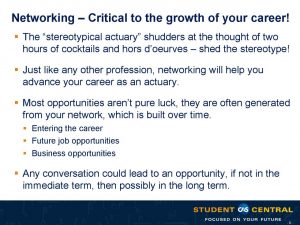 Phil Natoli, a Fellow of the CAS and member of the American Academy of Actuaries, manager in insurance and actuarial advisory services at Ernst & Young, went over the importance of networking. Natoli focused on how to establish your professional network by taking advantage of networking events offered by your school, local employers, and Student Central. He mentioned to always keep in mind that any conversation could lead to an opportunity, if not in the immediate term, then possibly in the long term.
 CAS staff actuary Rick Gorvett, Fellow of the CAS and Former Chair of the Actuarial Science Department at the University of Illinois at Urbana-Champaign explained how to effectively research companies. Some of Gorvett’s tips included tapping into other’s personal experiences, navigating through the company website and where the most pertinent information can be found, and researching recent news articles on the company. He also went into more detail on how A.M. Best’s Insurance reports and SEC 10-K report can help guide your search.
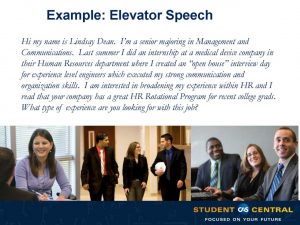 Lauren Fitzgibbon, senior campus recruiter at Liberty Mutual Insurance shared tips on getting the most out of career fairs and how to prepare your resume. Fitzgibbon’s advice covered how to stand out at a career fair by creating an “Employers I Want to Work For List”, having a 60 second elevator pitch ready, and she provided a Do’s and Don’ts to keep in mind while at the fair. She also shed light on what recruiters want to see on your resume, what things to highlight, what words to avoid and how to use your career services office if your university has one.
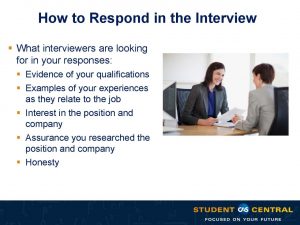 Helen Simonett, personal lines pricing actuary at Travelers, and a Fellow of the CAS went into detail on how to hone your interview skills. Simonett started with helpful tips on researching the company, being able to speak to everything on your resume, and preparing questions for the interviews. She went into further detail on what interviewers are looking for in your responses, what questions you might be asked and how to respond, and what questions to avoid asking.