“Well, there they go again…”
Any actuaries who have lived through a change in exam structure have probably said, heard, or at least sympathized with this sentiment. I suspect that students and faculty interested in actuarial science may be having similar thoughts right now. I recall struggling to comprehend the impact of exam changes during my own march (perhaps it could be more accurately described as a meander) toward Fellowship, followed later by helping employees and students sort out and interpret subsequent exam transitions.
But there is an important positive aspect of occasional exam changes: to the extent that they represent subject matter adjustments in response to the evolving skill set necessary for future actuaries, such changes reflect a nimble admissions structure keeping pace with a dynamic and growing profession.
In early January, the CAS announced two new exams, which I believe can best be understood in this positive context. Indeed, the recipe for this most recent exam change was robust anticipation of future needs – with a pinch of “necessity” thrown in.
Let’s explore the Whys, Wherefores, and the Reasons Thereof…
Why the Change?
The “necessity” occurred a year or so ago, when the SOA notified the CAS that it was planning to
discontinue Exam C (which most candidates use to get credit for our Exam 4 requirement via waiver) after spring 2018. The CAS decided to use this development as an opportunity to review and update not just the Exam 4/C subject matter being lost, but also the largely related topics on CAS Exam S. In fact, while addressing Exams 4/C and S was the immediate and highest priority, we actually undertook a review of the CAS’s entire exam syllabus. Literally hundreds of people provided input to this effort to determine what skills and knowledge an “Actuary of the Future” should have. One of the main takeaways from this effort was a strong consensus that we need to test more statistics and predictive analytics material in our exams.
What are the Changes?
The result was the creation of two new CAS exams: Modern Actuarial Statistics I & II (MAS-I & MAS-II). These new exams will replace two existing exam requirements Exams S and 4/C, respectively) beginning in 2018. They have been designed to address the emerging subject matter needs of future actuaries, and to increase the general relevance of our basic education system with respect to statistical and analytics skills.
Basically, MAS-I modifies and updates our current Exam S – it’s similar to Exam S, but with more emphasis on applied modeling and generalized linear models. It will first be offered in the spring of 2018, and there’s a simple Exam S-equivalent transition rule. The draft syllabus and learning objectives for MAS-I are available on the CAS website.
 New Exam MAS-II covers some of the material in Exam C – primarily credibility theory – but also covers new statistics and analytics materials such as Linear Mixed Models, Bayesian Analysis & Markov Chain Monte Carlo, and Statistical Learning, all of which have become valuable and critical for casualty actuaries. This exam will first be offered in the fall of 2018, and the transition rule simply dovetails with the last scheduled offering of Exam C in the spring of 2018. The draft syllabus for MAS-II is available on the CAS website. Note that, although MAS-I is not a formal prerequisite for MAS-II, the latter exam will assume familiarity with the material on MAS-I.
Each of these exams will be a four-hour test, so there will be basically no increase in exam hours required for CAS credentials. They will have a multiple-choice format, and will initially be given as paper-and-pencil exams (although, in line with one of our strategic goals, we will consider evolving to a computer-based framework as these exams mature.) Both exams will be offered in both spring and fall, in the normal CAS timeframe, and will have sample questions available before the first offerings.
How Have Overall CAS Credentialing Requirements Changed?
The CAS Associateship designation will still require two VEEs, two online courses, a professionalism course, and seven exams. The difference is:
• Current ACAS Exam Requirements:
o Four preliminary exams: 1/P, 2/FM, 3F/MFE, and 4/C.
o Three associateship exams: S, 5, and 6.
• New ACAS Exam Requirements (2018):
o Three preliminary exams: 1/P, 2/FM, and 3F/IFM (modified MFE exam).
o Four associateship exams: MAS-I, MAS-II, 5, and 6.
See infographic depicting these changes. Fellowship requirements beyond the ACAS designation are unchanged.
How Should Students and Faculty Be Thinking About These Changes?
The impact of our basic education structure on actuarial students and faculty is hugely important to us at the CAS. Based on my experience from over a decade as director of the actuarial science program at the University of Illinois, I suggest that students and faculty consider and keep in mind the following:
1) The CAS has a duty to the actuarial profession, as well as our constituents and stakeholders, to help ensure that future actuaries are prepared to address the challenges of a rapidly changing world. These new exams demonstrate our commitment to providing education that’s uniquely relevant to property-casualty actuaries, so that we can continue to meet the emerging needs of future actuaries and their employers.
2) The new exam structure will benefit students because of its relevance. As mentioned above, the fact that Exam C was discontinued provided us an opportunity to create a replacement exam (and to enhance and upgrade another exam) that focuses on the modern statistics and analytics that actuaries are now using, and will certainly use more over time. This will increase the relevance of the CAS exam syllabus with respect to emerging statistical and analytics skills, with minimal changes to the overall exam structure.
3) These new exams replace existing exams, resulting in virtually no net increase in exam hours required for CAS credentials.
4) Finally, I think it’s very important to emphasize that students will not be disadvantaged by these changes. The vast majority of students do not take more than three exams in school (only about one in ten of them do), and for those top students that do take more than three, they will by then likely have already had internships and perhaps a full-time job opportunity in a specific practice area. Also, there is really no drawback to taking an “off-track” exam. No one will be disadvantaged in the recruitment process by taking an exam that ends up not “counting” toward a credential, and certainly any exposure to good mathematical or actuarial material is always a good thing. The CAS will continue to accept SOA Exams P, FM, and IFM (modified MFE exam) for our preliminary exam requirements. So while there will be one fewer SOA exam credit available via waiver, the vast majority of candidates will already be employed and on their (hopefully CAS!) exam track at the point that candidates would be sitting for their fourth exam.
In my view, these exam changes are good for everyone: our casualty actuarial profession, our CAS members, students (our future practitioners), and faculty. We are all participants in an exciting and evolving field, and we hope you will agree that the quality and relevance of our unique property-casualty actuarial education system will be enhanced by these changes!
We’d welcome your comments or feedback on this blog post, or questions you might have about these exam changes.
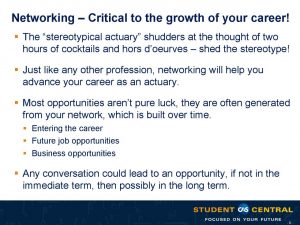 Phil Natoli, a Fellow of the CAS and member of the American Academy of Actuaries, manager in insurance and actuarial advisory services at Ernst & Young, went over the importance of networking. Natoli focused on how to establish your professional network by taking advantage of networking events offered by your school, local employers, and Student Central. He mentioned to always keep in mind that any conversation could lead to an opportunity, if not in the immediate term, then possibly in the long term.
 CAS staff actuary Rick Gorvett, Fellow of the CAS and Former Chair of the Actuarial Science Department at the University of Illinois at Urbana-Champaign explained how to effectively research companies. Some of Gorvett’s tips included tapping into other’s personal experiences, navigating through the company website and where the most pertinent information can be found, and researching recent news articles on the company. He also went into more detail on how A.M. Best’s Insurance reports and SEC 10-K report can help guide your search.
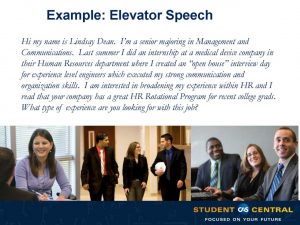 Lauren Fitzgibbon, senior campus recruiter at Liberty Mutual Insurance shared tips on getting the most out of career fairs and how to prepare your resume. Fitzgibbon’s advice covered how to stand out at a career fair by creating an “Employers I Want to Work For List”, having a 60 second elevator pitch ready, and she provided a Do’s and Don’ts to keep in mind while at the fair. She also shed light on what recruiters want to see on your resume, what things to highlight, what words to avoid and how to use your career services office if your university has one.
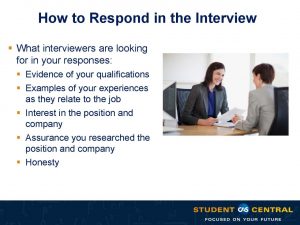 Helen Simonett, personal lines pricing actuary at Travelers, and a Fellow of the CAS went into detail on how to hone your interview skills. Simonett started with helpful tips on researching the company, being able to speak to everything on your resume, and preparing questions for the interviews. She went into further detail on what interviewers are looking for in your responses, what questions you might be asked and how to respond, and what questions to avoid asking.

 Communication – Interpersonal and intrapersonal communication are essential in this field. Once someone understands a complex actuarial concept, it is then their duty to be able to communicate these results and conjectures to their coworkers, managers, and other departments. To develop this skill, I recommend just getting out there and talking to people. If an opportunity to teach a class or give a presentation arises, jump on it- practice makes perfect!
 Do Your Research – What is an actuary, and why do you want to be one? Do you know the differences and similarities between consulting and industry? Investigating this information through speaking to professors and people currently in the industry is a great way to figure things like this out. Additionally, there are online resources like CAS Student Central, Actuarial Outpost, BeAnActuary and other forums dedicated just to educating you.
 Study Smart – By collaborating with peers, studying becomes a lot more beneficial. Locking yourself away in a silent cubicle can lead to a lot of frustration and misunderstandings. Working through problems with peers and discussing difficult concepts often leads to a better understanding for all parties. Additionally, check out online study tools like Coaching Actuaries and The Infinite Actuary to optimize your exam preparation techniques.
 Network – If you’re in school, and your school has an Actuarial Science Club, join it. Your peers are going through similar triumphs and struggles, and this comradery can offer a great support system. Additionally, attending recruitment or informational conferences, company presentations, and even meeting digitally (i.e. LinkedIn or forums) can lead to interpersonal connections in which you can leave a lasting impression on a recruiter and learn about what they do. Sometimes, who you know becomes more important than what you know.
 Programming – If there is an opportunity to learn more information about programming or data, take advantage of it. For example, this semester, I heard about a business class at my school teaching information about data analytics, IT, and a brief introduction to Super interesting! Often, similar opportunities exist in our lives but may not be mandatory or well-known—find them, and try them. There are also many online resources for programming; just hop on your favorite search engine.
 Time Management – Think critically about the best way for you to manage your time. Some people may utilize an online calendar and scheduling tool, but keeping a physical planner or calendar might work best for you. When studying for exams, know when the next sitting is and be sure to sign up far in advance to get your ideal time slot and location. Studying for an exam takes a lot of dedication and time management, especially when done in conjunction with work and/or school.
 Diversity – Our world is a very diverse place, and you will work with people of different races, genders, sexual orientations, ability statuses, religions, nationalities, and ethnicities than you. Knowledge about inclusion and social identity goes a long way, especially when you’re able to integrate your knowledge into your everyday interactions. Working with a diverse group of people brings forth a mélange of new ideas and can propel your work to a new level.
 Know How to Use Prometric-Permitted Exam Calculators – Having to calculate a bond yield or the present value of an annuity on a TI-30 can be emotionally and physically exhausting. When you have access to a BA-II Plus, calculating these values becomes a lot easier. However, you have to know the right sequence of buttons to press and more. I suggest using only Prometric-permitted exam calculators when studying for actuarial exams. If you find that financial calculators are difficult to navigate, YouTube has great tutorials for the BA-II Plus!
 Have Fun! – While we have a long road ahead of us, it is important to take some time to be a human. Spending a night with friends after a long week can be a great way to recharge and take care of yourself. Joining a fun club, community organization, or volunteering can give you some time to relax, reflect, and do good.