CAS Student Conference at the Spring Meeting — New York City

The Casualty Actuarial Society is looking forward to hosting a Student Conference during the 2026 CAS Spring Meeting in New York City on May 5, 2026! Members of CAS Student Central are invited to participate in this free one-day program, designed for university students interested in pursuing an actuarial career.

What to Expect:

  • Connect and Network with CAS Members
  • Learn More About the CAS and Property and Casualty Industry
  • Attend Professional Concurrent Sessions and Student-Specific Sessions
  • Take Professional Headshots

Registration is now open to members of CAS Student Central. Students who are not yet members can easily sign up online for free, and then register to attend the event. There is no cost to attend the Student Conference, but participants are responsible for their own travel and lodging expenses (if applicable).

Agenda
8:30 AM – 9:00 AM Breakfast and Registration
9:00 AM – 9:45 AM Welcome and Introduction to the CAS
9:45 AM – 10:45 AM Exploring the Quantitative Analysis of Gambling and the Parallels to Insurance
10:45 AM – 11:00 AM Break and Transition
11:00 AM – 12:00 PM Concurrent Session
12:00 PM- 12:15 PM Break and Transition
12:15 PM – 1:30 PM Lunch, Speed Networking, and Group Photo
1:30 PM – 2:30 PM Concurrent Session
2:30 PM – 3:00 PM Program Wrap-Up

Register Now!

If you have any questions, please contact the Student Engagement Coordinator, Meredith Burke, at MBurke@casact.org.

The 2026 CAS Spring Meeting will be held at:

Sheraton New York Times Square
811 Seventh Avenue
New York, NY 10019, US


Search CAS Directory


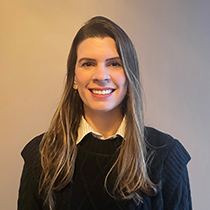
CAS Profile: Joana Neves, CAS Candidate, MIBA

Joana Neves, MIBA, is an actuarial manager and property and casualty (P&C) reserving specialist with over 12 years of experience in the insurance industry.

Originally from Brazil, Joana built an actuarial career before moving to the United States in 2023 to pursue her long-time goal of working abroad. Before making the move, she held senior leadership roles at one of the largest P&C insurers in Brazil, where she led initiatives such as IFRS-17 implementation and a large reserving restructuring across multiple lines of business.

Leaving a stable and well-established role was not an easy decision, but it allowed her to continue growing in a new market. After relocating to the U.S., Joana transitioned into the CAS pathway, leveraging an internation waiver for the preliminary exams, and is currently studying for the upper-level exams.

Where do you work and what is your position?

I currently work at WTW as a Lead Associate. My role focuses on P&C reserving analyses across multiple lines of business, supporting regulatory and financial reporting, and leading actuarial projects from planning through delivery. I also spend time mentoring junior actuaries and managing projects.

Why did you decide to become an actuary?

I didn’t really know what I wanted to do when I was finishing high school. I knew I liked math, but I didn’t want to be a teacher, and at 17 I was convinced that not liking physics meant engineering was definitely not for me.

Then I discovered actuarial science, a relatively new degree at the time, with strong demand and opportunities in larger cities. Honestly, I didn’t fully know what I was getting into, but it turned out to be a great decision, and I’m very happy I chose this path.

What parts of the profession do you love the most?

I love that the actuarial profession constantly challenges me to learn and adapt. In P&C, we work with complex data and models, but the ultimate goal is to support decisions that have a real impact on financial stability and risk management, which makes the work both meaningful and engaging. I also enjoy working closely with different teams and translating technical analyses into clear insights that others can understand and use.

What is the best piece of career advice you have ever received?

  • Focus on long-term growth and trust the knowledge you’re building.

One of the best pieces of career advice I’ve heard is to prioritize long-term growth over short-term comfort. The CAS exam process reinforces this mindset: You don’t have to get everything right at once, but consistency and persistence matter. Exams are challenging, but they’re a powerful way to learn, demonstrate your skills, and open doors across companies and countries.

  • Don’t underestimate the importance of soft skills.

Early in an actuarial career, it’s easy to think that being good at math and passing exams is enough. Over time, however, skills like communication, teamwork, leadership, and the ability to influence decisions become just as important, especially as responsibilities grow. These skills are often what turn strong technical work into real business impact.

  • For international professionals, don’t let imposter syndrome hold you back.

Insurance markets and regulations may differ from country to country, but actuarial methods and the understanding of the insurance business are highly transferable. For international students and professionals, it’s important to trust that foundation and recognize its value. Even in countries where exams are not required, they can help validate your expertise and create opportunities globally.

Why would you recommend a career in the P&C insurance industry to current college students?

I would recommend a career in P&C insurance because it opens a lot of doors. The actuarial exams are internationally recognized, which helps prove your knowledge and can make it easier to build a career across different companies, or even different countries.

Actuaries can work in areas like pricing, reserving, claims, catastrophe modeling, underwriting, capital modeling, enterprise risk management, analytics, or consulting. Even within reserving, one week I might be modeling reserves for a sports betting reinsurer, and the next I could be estimating environmental losses, analyzing marine exposures, or assessing long-tail liability risks.

What can students and early professionals do now to prepare for a career in the industry?

Getting involved with the CAS and taking advantage of its resources, events, and networking opportunities can make a big difference early in your career. I would also encourage students to not underestimate the power of mentorship — talk to people who are a few steps ahead of you, ask questions, and learn from their experiences. Those conversations can be just as valuable as exams or technical skills.
Search CAS Directory


CAS Profile: Bella Thiel, CAS Candidate

Bella Thiel is an actuarial analyst at Allstate Insurance and an active member of the CAS. She graduated from UW-Madison in 2024 and currently lives in Phoenix, Arizona.

Where do you work and what is your position?

I work as an actuarial analyst at Allstate Insurance, specifically on the National General team. We work on pricing auto, home, condo, and renters’ insurance across the U.S.

Why did you decide to become an actuary?

I decided to become an actuary after attending an actuarial career day. I loved the people and the projects they talked about. Most of all, I felt like I finally found my people: those who love math! I wanted to be able to use my creativity and math skills simultaneously while making a positive difference.

What parts of the profession do you love the most?

I love that actuarial science draws on so many different fields — math, economics, finance, risk management, psychology, environmental studies, etc. It forces you to know and care about important topics, such as the economy and the state of the world. I also love applying the concepts I learned in the actuarial exams in my job!

What is the best piece of career advice you have ever received?

“It’s a marathon, not a sprint.” — Kirk Peter, FSA and professor at UW-Madison. I think of this quote often when feelings of comparison come up in my career and in the actuarial exams. Everyone takes and passes actuarial exams at different rates. As long as you keep trying and don’t burn yourself out, I think anyone can get their credentials!

Why would you recommend a career in the P&C insurance industry to current college students?

YES — there are so many different paths you can take within P&C, and the work we do is important.

What can students and early professionals do now to prepare for a career in the industry?

Build your technical skills! There are plenty of free and online bootcamps, competitions, case studies, and resources to build your coding skills. Also, set realistic expectations. It might take longer than you think to achieve the next milestone, whether that’s getting a promotion or passing your exams. This can be a competitive field. But don’t feel discouraged; instead, understand that this career path will test your discipline and commitment.


Search CAS Directory


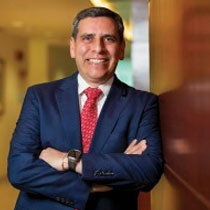
CAS Profile: Eduardo Esteva, CAS Affiliate, MAAA

Eduardo Esteva holds a bachelor’s degree in actuarial science from ITAM University in Mexico. He began his career as an automobile analyst, followed by a position in the National Commission of Insurance and Surety, where he helped create the first regulation of IBNR in Latinoamerica. Since 1999, Eduardo has served in consulting roles, beginning at Tillinghast where he became an Affiliate of the CAS and later gained his MAAA designation.

Where do you work and what is your position?

I work at Deloitte. I am Partner Leader for the Insurance Industry, and Leader of Actuarial Services for Deloitte Spanish Latin America.

Why did you decide to become an actuary?

When I was selecting my bachelor’s degree, I discovered the actuarial path. It sounded interesting and new with a lot of options. I am happy to be on this path — it is a very interesting profession!

What parts of the profession do you love the most?

I work as a consultant and love:

  • Supporting clients with business issues that they need to resolve
  • Tackling new challenges and finding solutions
  • Working with different clients and learning from different people who have other positions and career paths
  • Helping companies to define strategies and leverage their strengths

What is the best piece of career advice you have ever received?

Always do the right thing, no matter how difficult. Enjoy the ride.

Why would you recommend a career in the P&C insurance industry to current college students?

I recommend pursuing the P&C specialty if you are looking to be in a sector that offers a unique opportunity to help people when they need it most, and you also enjoy problem-solving and data analysis. This sector allows professionals to specialize in areas such as commercial insurance, personal lines, niche markets, or reinsurance, leading to expert roles and leadership positions. Also, there are continually new issues to work on — in recent years, these have included climate change and cybersecurity, for example.

What can students and early professionals do now to prepare for a career in the industry?

Find what gives you energy and passion, and pursue that. Hear the other person’s side, emphasize with them, learn to understand them first, and after that suggest options. Build the relationships. Learn to communicate.

Remember what Einstein said: “If you can’t explain it simply, you don’t understand it well enough.”


Search CAS Directory


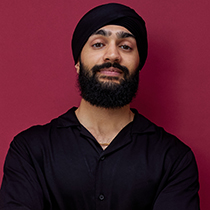
CAS Profile: Gaganjit Saini, ACAS

I have been working as a property and casualty (P&C) actuary for the past five years, and I continue to explore the vast range of actuarial specialties. From working on modernizing the Rating Algorithm from prior legacy systems to rate segmentation and portfolio steering to working on core actuarial indications, I enjoy exploring the vast range of actuarial specialties.

Where do you work and what is your position?

I currently work at Intact Financial Corporation in Toronto as a Senior Actuarial Analyst.

Why did you decide to become an actuary?

Back in high school, I was in my final year and had an interest in pursuing a career in finance or accounting. I did have a very keen interest in mathematics and wanted to do something challenging, and my teacher at the time had mentioned a career as an actuary, which at the time was unknown to me.

Learning about it being in the applied mathematics realm and also that they were compensated quite well, I decided to venture to a career path in actuarial science at the University of Waterloo. From there I kept exploring deeper into the career path through courses, examinations, and internships.

What parts of the profession do you love the most?

As I have grown through my career, I love how there isn’t one definition of an Actuary. We do surprisingly many things! Hearing about the career paths actuaries have taken, listening to career panelists at the CAS Annual Meetings, and reading about the various career paths in Actuarial Review shows that actuarial science is truly a multidisciplinary career. This gives assurance to those wanting to pursue a P&C career that they can find pathways that interest them the most and venture to non-traditional roles, if they so desire!

My favorite part of this profession, however, is how humble actuaries are. We all know the pathway to becoming an actuary is challenging, and I am blessed to have supportive peers that uplifted and help each other tackle the many issues faced day to day.

What is the best piece of career advice you have ever received?

“Why?” This advice was given to me by my mentor at my first internship at a life insurance company. This is not only useful as an actuary, but in any career. Being curious about what is being taught through examinations or projects at work allowed me to develop a better understanding of the complex nature of insurance.

Reflecting back to my undergrad, I was focused on just getting good grades, not fully appreciating the knowledge taught at the time. As I progressed through the higher exams, the related concepts that they built on at first were difficult, since I had developed a “passing mentality.” Once I started to explain and ask why a topic was useful, it made it so much easier to understand some of the complex issues and allow me to see how it was used in real world scenarios.

Even in my career, I have used this advice to improve deliverables to stakeholders and challenge myself to go beyond the normal expectations for projects. I have continued to carry the importance of asking “why” to various interns and mentees, and I have come across to help them continue to challenge themselves.

Why would you recommend a career in the P&C insurance industry to current college students?

An actuarial career may seem like it’s only about insurance, but once you explore the various functions that actuaries are involved in — like risk management, banking, investing, strategy, pricing, reserving, computer science, etc. — there is a pathway that will definitely interest almost any candidate. As the insurance world evolves, actuaries are always at the forefront of tackling new challenges and using new technologies to advance the industry. The exam pathways and recent flexibilities offered by the CAS have made it more accessible for aspiring actuaries to become an actuary. There are great resources available, from the Student Central Summer Program to reading the Actuarial Review to gain insights on issues related to insurance and the future of the industry.

What can students and early professionals do now to prepare for a career in the industry?

The examinations are technical and challenging — it is best to be able to not only understand these technicalities, but also be able to communicate them. In the real world, all the fancy AI models will need to be explained to business stakeholders, customers, and your peers. Being able to articulate ideas and thoughts will set up early professionals for success, with the curious mindset to shape the future of actuarial work.

Remember that AI can make 90% of the work easier in the future — but there is still that 10% that is governed by decisions and ideas that you bring to life, and cannot be replaced.


Search CAS Directory


CAS Profile: Melissa Freed, ACAS

Melissa began her career in health insurance before transitioning to property and casualty (P&C). Over the past six years, she has worked with a variety of product lines, ranging from long-term disability to travel insurance to snowmobiles. Melissa studied at McGill University in Montréal and has worked in both Canada-facing and U.S.-facing insurance roles.

Where do you work and what is your position?

I am a Senior Actuarial Analyst at Allstate. My team handles segmentation and product design for all of our vehicle products.

Why did you decide to become an actuary?

As a teeenager, I spent much of my spare time trying to predict (with very basic statistics) my rankings at future swim competitions. Eventually, my parents told me that there’s a career path that pays you to predict things. 🙂

What parts of the profession do you love the most?

The work allows for so much creativity! In a field where there is never one correct answer, most of the projects I work on leave room for exploring different options, innovating on prior solutions, and developing a personal analytical style. Every task feels like a puzzle — sometimes even a game — where you get to play around until youfind a way to put the pieces together.

What is the best piece of career advice you have ever received?

Determine your personal brand, and sell it. When working in large teams, I found that it’s easy to become lost in the crowd. Over time, I discovered that one doesn’t always need to be the best or most visible analyst to contribute to a team’s success. Soft skills can be just as much of an asset — the key is to find your strengths and to become known for them.

Why would you recommend a career in the P&C insurance industry to current college students?

The industry is constantly growing and innovating. P&C insurance guarantees a dynamic career path with so many applications that one can never be bored. It’s the perfect career for someone who loves variety!

What can students and early professionals do now to prepare for a career in the industry?

Attend as many networking events as possible. Technical and analytical skills will largely be built on the job, but the soft skills required to have a successful interview — and the learning opportunities involved with speaking to industry professionals — can both be gained through networking.


Search CAS Directory


CAS Profile: Alex Morrone, FCAS

I am currently an SVP & Actuary at Crum and Forster and CFO of the Commercial and Executive division. I started my career within the Travelers Actuarial Leadership Development Program and also spent time at The Hartford in a variety of roles, as well as overseeing their actuarial student program.


Where do you work and what is your position?

Crum and Forster, SVP & Actuary, CFO of Commercial & Executive.

Why did you decide to become an actuary?

I always had a passion for mathematics and was on a path to being a math teacher, after tutoring for a number of years. My professor saw I needed a challenge and introduced me to actuarial exams, and it quickly snowballed from there!

What parts of the profession do you love the most?

I love constantly learning about different parts of the economy. Every year brings evolving risks and with every worker, building, and liability being insured, I have a lifetime of learning and challenges ahead of me.

What is the best piece of career advice you have ever received?

Understand the “why” behind what you are doing and its importance. Doing work will only get you so far — understanding your work will unlock a lot more opportunity.

Why would you recommend a career in the P&C insurance industry to current college students?

Property and Casualty actuarial science is a constantly evolving field that works to understand and quantify risk throughout the world, and as a result there is always something new to discover.

What can students and early professionals do now to prepare for a career in the industry?

Build a strong base of mathematics and round it out with business and presentation skills so you can effectively influence business partners.


Search CAS Directory


CAS Profile: Jim Weiss, FCAS, CPCU

I am presently Chief Risk Officer — Commercial & Executive at Crum & Forster (C&F). The role has a dual focus: The first involves leading a small group of actuaries focused on predictive modeling for MLOps. The second involves working with business partners to ensure our division’s emerging risks are registered, and that reasonable controls are in place.

I originally joined C&F as a modeling actuary in 2018, and my responsibilities grew over time. Prior to that, I served at an advisory organization called Verisk. I started as a summer intern in 2002, joined full-time in 2003, and rotated through various roles over the next 15 years — including data management, pricing, and analytical products.

Where do you work and what is your position?

Chief Risk Officer — Commercial & Executive, Crum & Forster.

Why did you decide to become an actuary?

After a couple of summers pushing shopping carts and flipping hamburgers, I had a large number of quantitative disciplines on my radar for internships during my junior year at Manhattan College. It just so happened that actuarial work presented the most timely and competitive internship offer — and I never looked back afterward. So, I suppose fate partially made my decision to become an actuary.

What parts of the profession do you love the most?

Actuaries provide a very important service that greatly benefits society, so I feel a strong sense of purpose when I go to work. I also feel a strong sense of community. The CAS provides ample opportunities for me to connect with other actuaries and give back, which I love. C&F is also very involved in its local communities, and it is exciting to tap into these efforts from time to time and help make a difference where I live and work.

What is the best piece of career advice you have ever received?

In 2018, I briefly met an actuary who had competed (quite successfully) on reality TV. I asked them how they found the courage to do something as challenging as going on a TV show. They said something along the lines of, “Don’t think, just do.” On a day-to-day level much of an actuary’s job is to think, which makes it easy to overthink. The reminder to go with my heart sometimes was timely and invaluable.

Why would you recommend a career in the P&C insurance industry to current college students?

In the middle of what could be the third Industrial Revolution, it is very difficult to say what the future of work will look like in years or decades. That said, actuarial work (quickly) confers a broad range of technical and business skills that allow you to operate in an industry society effectively cannot live without. In my opinion that is about as future-proof a position one can be in within this environment.

What can students and early professionals do now to prepare for a career in the industry?

This never came naturally to be (being a bit shy), but making connections is the best preparation one can make for future success. I say “making connections” rather than “networking” because the best relationships are forged on common ground, not cellularly transmitted. Every if connections don’t open doors, they provide windows into others’ experiences. That light doesn’t always come through on exams, textbooks, or projects.


Search CAS Directory


CAS Profile: Marty Arnold, FCAS, CERA

Marty Arnold, FCAS, CERA, is an insurance executive who started his career as an actuary before taking on challenges where he gained experience in Corporate Strategy, M&A, ERM, Reinsurance, Product Development, and Underwriting.

Where do you work and what is your position?

I am currently Amerisure’s Chief Underwriting Officer, where I lead underwriting strategy, Field Marketing and Underwriting, product development, Special Risk, and Amerisure Programs.

Why did you decide to become an actuary?

I was in high school when the Jobs Rated Almanac ranked the actuarial profession as the #1 job in America.

What parts of the profession do you love most?

I enjoy navigating complex problem-solving that helps drive results. Leading teams of smart people to solve problems that matter, empowering the right people to make decisions — and giving them the tools to do so — is fun.
What is the best piece of career advice you have ever received?
“Never stop being a student,” is a reminder that while I hold an executive title today, the market is constantly evolving — new data science tools, emerging risks like cyber liability, changing regulations. This advice keeps me grounded, ensuring that I prioritize continuous learning and adaptability over resting on my credentials. It’s critical in the fast-paced world.

Why would you recommend a career in the P&C industry to current college students?

We are the invisible engine of the economy. Very little would move or be built without a robust P&C insurance industry. We provide the safety net that allows people and businesses to take risks, which is necessary for progress.

What can students and early professionals do now to prepare for a career in the industry?

Learn the business by reading voraciously — not just insurance news, but geopolitics, macroeconomics, emerging tech — and talking to people in a variety of roles. Study big losses and insolvencies in the industry and understand how much was bad luck versus poor decisions-making.
Understand how the world is changing in terms of risks we insure, but also how the role of an actuary or underwriter will change during this AI shift. The most valuable professionals. Will be those who can navigate the gray space of the future, rather than managing the certainty of the past.


Search CAS Directory


CAS Profile: Anthony Bustillo, FCAS

I’m an FCAS who has worked in insurance and consulting for over 30 years. I was a math major with an actuarial science concentration at the University of Michigan. Go Blue!

Where do you work and what is your position?

I am currently the Chief Risk Officer and Vice President of Enterprise Risk Management at Safety National (a Tokio Marine company) in St. Louis.

Why did you decide to become an actuary?

I was able to use math in a practical application… And it pays well coming right out of college!

What parts of the profession do you love the most?

You don’t realize how much of your everyday life revolves around risk and decisions you make. Because of that, I like being able to collaborate with others in trying to explain that to people — especially with numbers — without boring them too much!

What is the best piece of career advice you have ever received?

Continuously learn and do not burn bridges. The actuarial community is relatively small, and people and relationships drive it. You’d think it was numbers that drive our value, but it’s actually being able to explain numbers that gives actuaries value.

Why would you recommend a career in the P&C insurance industry to current college students?

You get to work on real-life risk scenarios. Anything you think is hot or trendy usually has some property/casualty insurance aspect to it. Or at least us P&C actuaries like to think it does!

What can students and early professionals do now to prepare for a career in the industry?

Learn much more than what’s on exams. Network and be intellectually curious. Consider that the job and position you have now will change and evolve and be ready to take on something new.


Search CAS Directory