CAS Profile: Jim Weiss, FCAS, CPCU
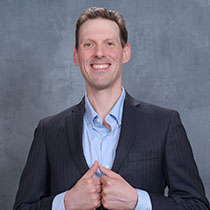 I am presently Chief Risk Officer — Commercial & Executive at Crum & Forster (C&F). The role has a dual focus: The first involves leading a small group of actuaries focused on predictive modeling for MLOps. The second involves working with business partners to ensure our division’s emerging risks are registered, and that reasonable controls are in place.
I originally joined C&F as a modeling actuary in 2018, and my responsibilities grew over time. Prior to that, I served at an advisory organization called Verisk. I started as a summer intern in 2002, joined full-time in 2003, and rotated through various roles over the next 15 years — including data management, pricing, and analytical products.
Where do you work and what is your position?
Chief Risk Officer — Commercial & Executive, Crum & Forster.
Why did you decide to become an actuary?
After a couple of summers pushing shopping carts and flipping hamburgers, I had a large number of quantitative disciplines on my radar for internships during my junior year at Manhattan College. It just so happened that actuarial work presented the most timely and competitive internship offer — and I never looked back afterward. So, I suppose fate partially made my decision to become an actuary.
What parts of the profession do you love the most?
Actuaries provide a very important service that greatly benefits society, so I feel a strong sense of purpose when I go to work. I also feel a strong sense of community. The CAS provides ample opportunities for me to connect with other actuaries and give back, which I love. C&F is also very involved in its local communities, and it is exciting to tap into these efforts from time to time and help make a difference where I live and work.
What is the best piece of career advice you have ever received?
In 2018, I briefly met an actuary who had competed (quite successfully) on reality TV. I asked them how they found the courage to do something as challenging as going on a TV show. They said something along the lines of, “Don’t think, just do.” On a day-to-day level much of an actuary’s job is to think, which makes it easy to overthink. The reminder to go with my heart sometimes was timely and invaluable.
Why would you recommend a career in the P&C insurance industry to current college students?
In the middle of what could be the third Industrial Revolution, it is very difficult to say what the future of work will look like in years or decades. That said, actuarial work (quickly) confers a broad range of technical and business skills that allow you to operate in an industry society effectively cannot live without. In my opinion that is about as future-proof a position one can be in within this environment.
What can students and early professionals do now to prepare for a career in the industry?
This never came naturally to be (being a bit shy), but making connections is the best preparation one can make for future success. I say “making connections” rather than “networking” because the best relationships are forged on common ground, not cellularly transmitted. Every if connections don’t open doors, they provide windows into others’ experiences. That light doesn’t always come through on exams, textbooks, or projects.